


In modern industrial automation, conveyor chain guides, as key transmission components, directly determine production efficiency and equipment stability. Polyethylene conveyor chain guides, with their superior characteristics, have become the preferred solution for many industries, including food, beverage, tobacco, and pharmaceuticals.
The core advantage of polyethylene conveyor chain guides is their superior wear resistance, far exceeding that of ordinary carbon steel, reaching several times higher. This allows them to perform stably on high-frequency, high-load conveyor lines, making them particularly suitable for high-frequency operation scenarios such as food factories. Even after long-term use, surface wear is minimal, effectively extending equipment lifespan, reducing guide replacement frequency, and significantly lowering equipment maintenance costs.
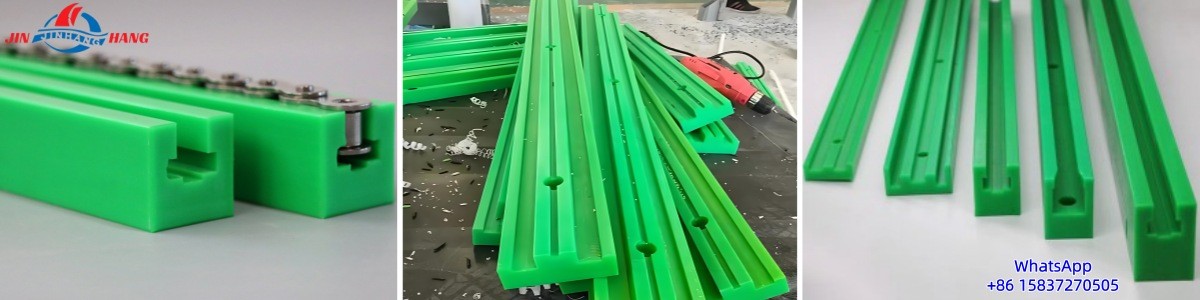
Excellent impact resistance and toughness are another major highlight of polyethylene chain guides. Even under heavy loads or sudden load changes, they will not break or deform, ensuring the continuity and safety of the conveying process. They play a prominent role in scenarios with frequent start-stop operations and variable loads, such as logistics sorting and electromechanical assembly.
From beer and beverage bottling lines and tobacco sorting equipment to pharmaceutical packaging and logistics conveying systems, polyethylene chain guides, with their stable, reliable, and maintenance-free advantages, have become an indispensable core component in automated production lines across various industries, providing strong support for efficient and green industrial automation.
This article was edited and compiled by Henan Jinhang Engineering Plastics Co., Ltd. (www.upeplastic.cn), with Jinhang as the editor. The company focuses on the research and development and production of polyethylene chain guides. Reproduction is welcome, please indicate the source.



 How Steel Silos Achieve Smoother Discharge with Polymer Liners
 Upgrading Coal Bunker Linings: Flame-Retardant UPE Sheets Offer Dual Advantages of Wear Resistance and Fire Protection
 Polyethylene Outrigger Pad That Can Be Lifted with One Hand Yet Easily Withstand Dozens of Tons of Outrigger Pressure
 Lightweight Road Paving Materials on the Rise: PE Road Mats Usher in a Wave of Application
 Solving Temporary Construction Challenges: Polyethylene Road Mats Become a New Choice for Temporary Site Paving
 Ultra-high Molecular Weight Polyethylene Liner Solves the Problem of Material Caking in Industrial and Mining Hoppers with Excellent Wear Resistance
Chat Online