

Many factories operating scraper conveyors frequently encounter issues such as excessive noise and high energy consumption. While managers often prioritize inspecting major components like motors and chains, they frequently overlook smaller parts—specifically the scraper blades. High-molecular-weight polyethylene (HMWPE) scraper blades offer a practical solution for improving these operational conditions.
During prolonged, continuous production, traditional metal scrapers constantly rub against the conveyor trough; this not only generates harsh noise upon impact but also creates significant frictional resistance that increases the load on the drive chain. In contrast, HMWPE scrapers possess inherent self-lubricating properties that minimize friction. By effectively reducing the conveyor's operational resistance, they allow the motor to operate without excessive power output, thereby alleviating high energy consumption.
HMWPE scraper blades are suitable for conveying a wide range of bulk materials, including grain, fly ash, chemical powders, and organic fertilizers. Chemically inert with most powdery or granular materials, they ensure stable operation and are compatible with various chain-based conveying systems—including en-masse (submerged) scraper conveyors—where they help reduce mechanical load and noise levels.
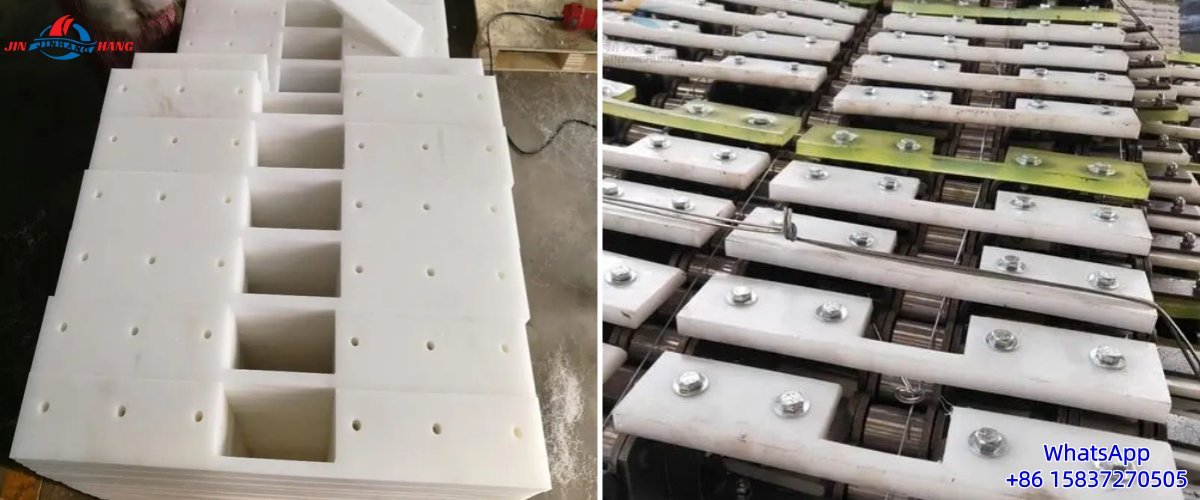
Effective equipment maintenance relies on optimizing details to cut costs and boost efficiency. Rather than waiting for severe chain wear or excessive noise to necessitate a major overhaul, it is far better to optimize the system by upgrading wear-prone components like the scraper blades. Thanks to their low-friction characteristics, wear-resistant polyethylene scrapers lighten the load on the entire conveyor line, minimize unnecessary equipment wear, and help maintain smooth, long-term production.
This article was compiled and edited by Henan Jinhang Engineering Plastics Co., Ltd. (www.upeplastic.cn); Managing Editor: Jinhang. The company specializes in the R&D and production of ultra-high molecular weight polyethylene (UHMW-PE) sheets. Reproduction is permitted provided the source is cited.




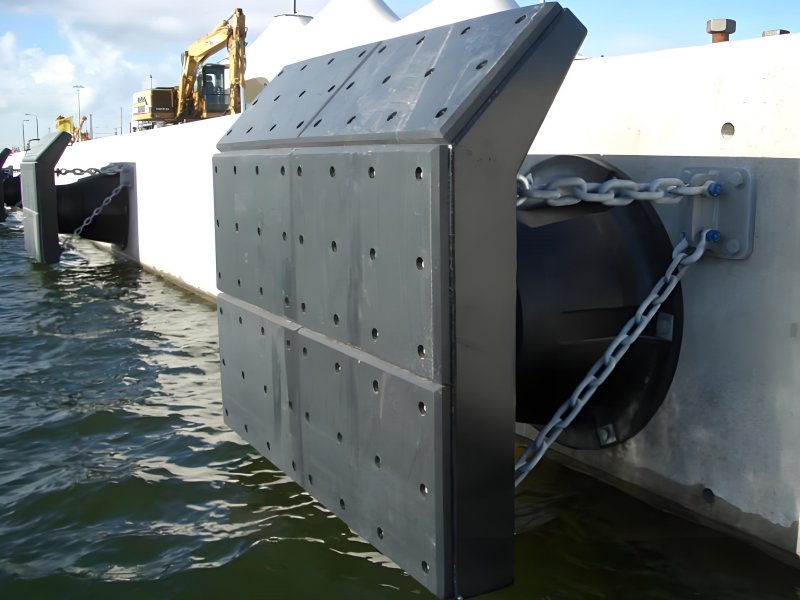
 Safeguarding Dock Berths: Polyethylene Fender Facing Panels Build a Robust Buffer Defense for Vessel Berthing
 Low-smoke, self-extinguishing, and flame-retardant UHMWPE liners address critical safety gaps in material handling
 Non-stick and impact-resistant: Polymer wear-resistant liners emerge as the preferred material for industrial and mining linings
 Vacuum box panel: Sliding support component for vacuum belt dewatering machines
 Polyethylene Outrigger Pads: Reliable Stability for Truck-Mounted Cranes on the Job
 Polyethylene Vacuum Box Covers for Paper Machines – Wear-Resistant, Energy-Saving Dewatering Components
Chat Online